Large Staircase Refurbishment in Langton Green, Tunbridge Wells
This one was special.
I had not taken on a staircase refurbishment of this size for a little while, and this was a big one. A large three-storey staircase in a detached family home in Langton Green, Tunbridge Wells, running from the ground floor up to the first and second floors.
It was the kind of staircase that had a real presence in the house. You noticed it as soon as you walked in, and because it carried through three floors, every detail mattered. The handrail colour, the spindle choice, the painted finish and even the bottom tread all had to work together.
The clients had a very good eye for design and knew exactly what they wanted to achieve. That always makes a project more enjoyable, but it also raises the bar. On a staircase this size, anything slightly off gets repeated again and again, so the details had to be right.
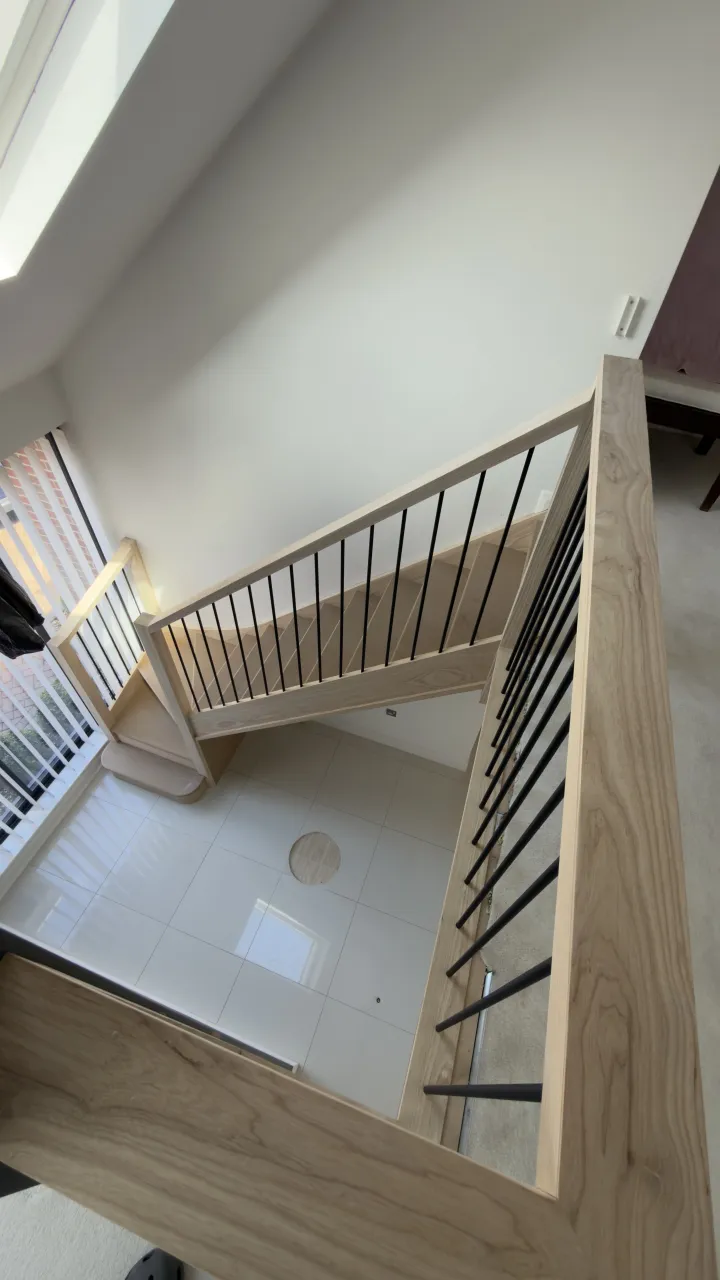
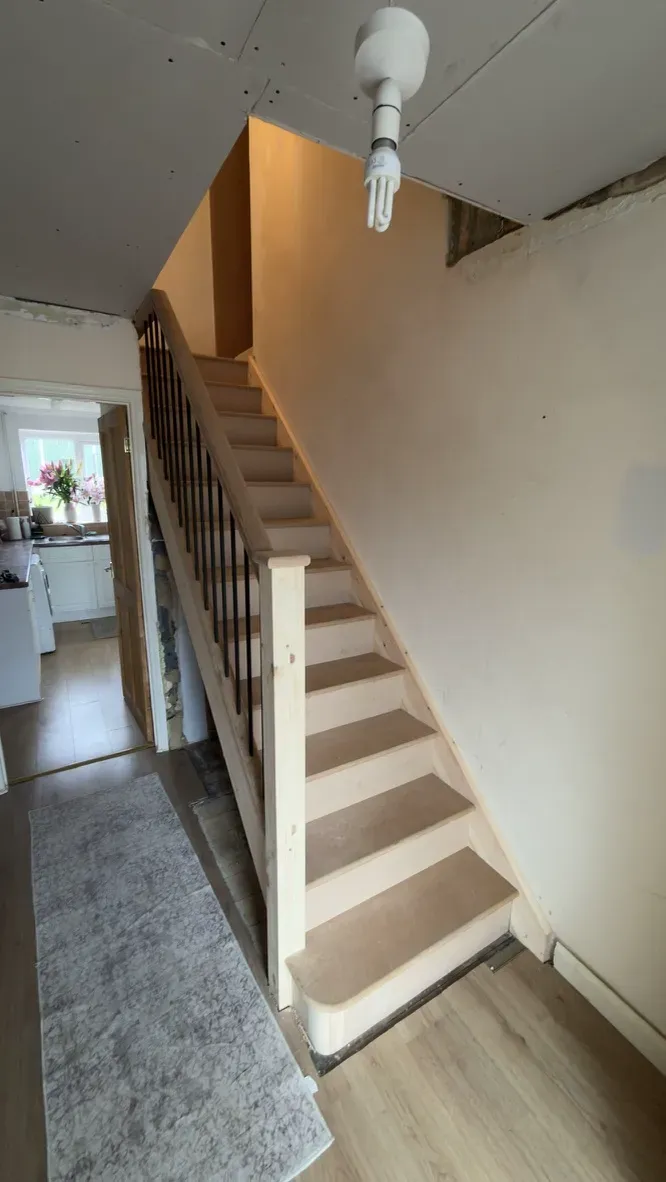
The existing staircase was solid oak, with large handrails and chunky 55mm timber spindles. It had clearly been a strong feature at one point, but the finish had started to date the space. The oak had taken on quite an orange tone from the existing Osmo oil, and the size of the handrails and spindles made the staircase feel heavier than it needed to.
There were also a few details I would have approached differently, although those were more on the making side than anything the clients were likely to have noticed. The main issue was the overall look and feel. The staircase itself had good bones, so the right approach was a full refurbishment rather than a complete replacement.
The brief
The brief sounded simple enough: dark oak handrails, black metal spindles, and a clean white finish everywhere else. In reality, there was a lot to think through.
The newel posts, nosings, staircases and aprons were all staying, so the new work had to sit properly with the existing structure. This was not a case of stripping everything out and starting again. The staircase needed to be modernised while keeping the parts that still worked.
The old handrails, baserails and timber spindles had to come out. In their place, we would fit new oak handrails, pine baserails ready for painting, and a mix of black metal spindle styles. The clients wanted the handrails stained to a dark Jacobean-style finish, but the colour had to be right. On a staircase this size, the handrail runs through the whole house. If the tone was wrong, it would be wrong on every floor.
The painted finish mattered just as much. The remaining oak had to be prepared properly so the white paint would bond, last, and look like it belonged there rather than something that had simply been put over the top. So the brief was clear, but it was not small: keep the bones of the staircase, remove the parts that were dating it, and rebuild the look with dark oak, black metal and a sharp white finish.
Getting the stain colour right
The first real challenge was the handrail colour.
The client had a sample of the colour they wanted, which is always useful because it gives everyone something physical to work from. The issue was that the Jacobean Oak stain available now did not give the same result as the image and sample we were trying to match.
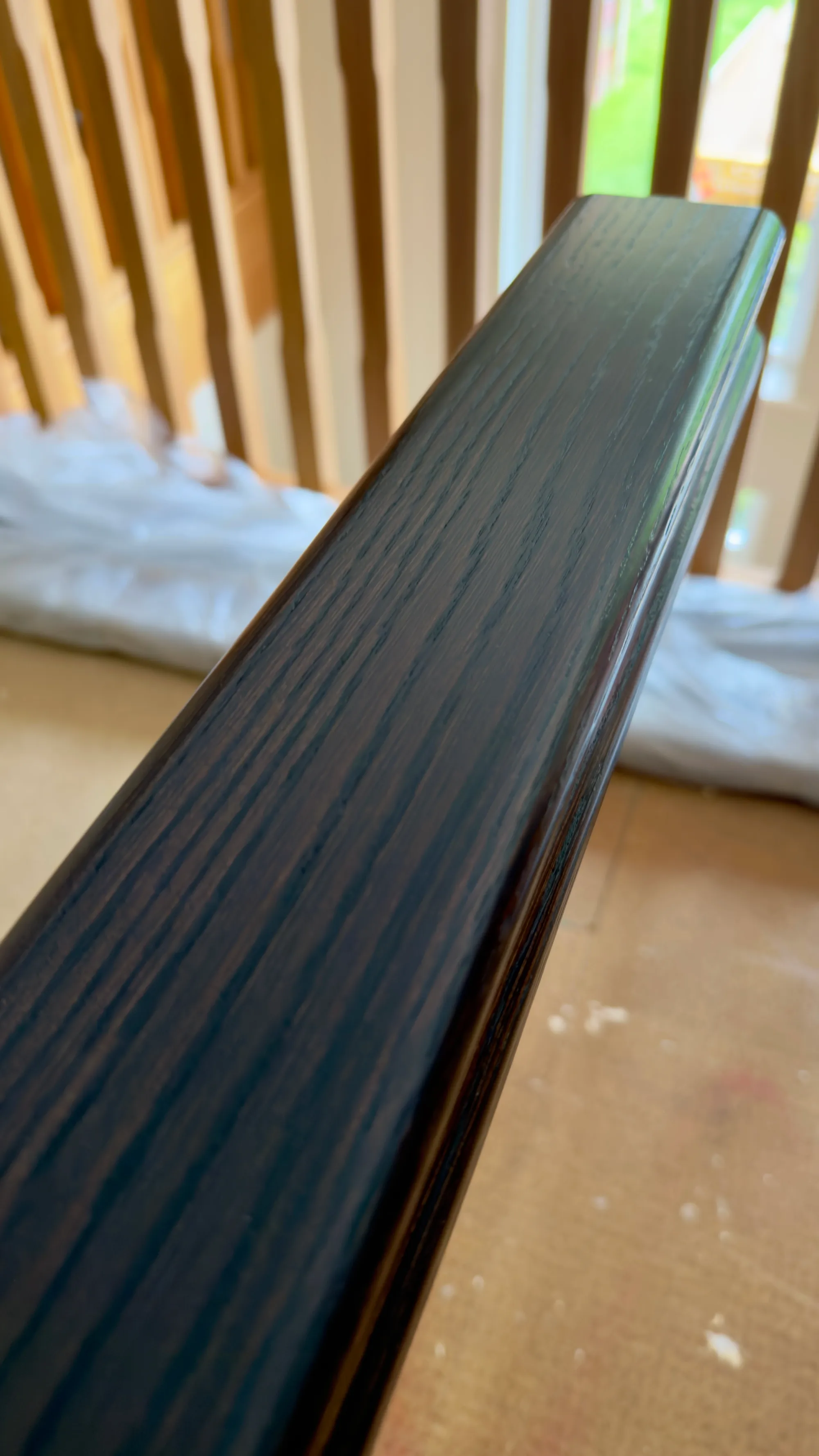
Rather than push ahead with something that was nearly right, we went back to the drawing board. With help from the wider team, we worked through the finish properly and came up with a colour that sat close to the original idea, but had its own character. It gave the oak a deep, rich tone and brought out the grain beautifully.
The customers named the colour themselves: Arundel Oak.
The stain really brought out the grain in each oak handrail. Because every length of oak takes the stain slightly differently, each handrail had its own tone and character.
That is one of the best things about working with timber. You can aim for a consistent finish, but the material still has a say in the final result.
Removing the original staircase components
The strip-out was fairly epic.
There were 180 old timber spindles to remove, along with 15 handrails and baserails across the three floors. Everything had to be taken out carefully, carried up and down the stairs, and moved out without damaging the parts of the staircase that were staying.
It was a lot of work, but the good thing was that the old oak components did not just go into a skip. They were collected and taken to a reclamation yard, giving them a chance to be used again somewhere else. On a job this size, that felt like the right thing to do.
Once the old handrails, baserails and spindles were out, I could start working through the house floor by floor, fitting the new oak handrails and pine baserails ready for the decorators to follow behind.
Preparing the existing oak for paint
A big part of the success of this staircase refurbishment came down to the preparation.
The clients wanted the remaining timberwork finished in white, but painting over existing finished oak needs to be done properly. The old finish had to be dealt with first. Every inch of the remaining oak needed to be sanded to create a key for the primer.
That part is slow, dusty and hard on the fingertips, but it matters. Without the right preparation, paint can struggle to bond properly. On a staircase, that is asking for problems. Newel posts, aprons, nosings and surrounding timberwork take regular knocks and contact, especially in a busy family home.
After a couple of days of sanding, the existing timber was ready for primer. The oak handrails were taped up carefully, and the decorators could start building up the painted finish. The paint used was Benjamin Moore Scuff-X in Chantilly Lace, satin. It gave the staircase a crisp, bright white finish that worked really well against the dark stained oak and black metal spindles.
Fitting 244 black metal spindles
Once the painting was complete, it was time to bring the staircase back to life.
That meant fitting 244 black metal spindles.
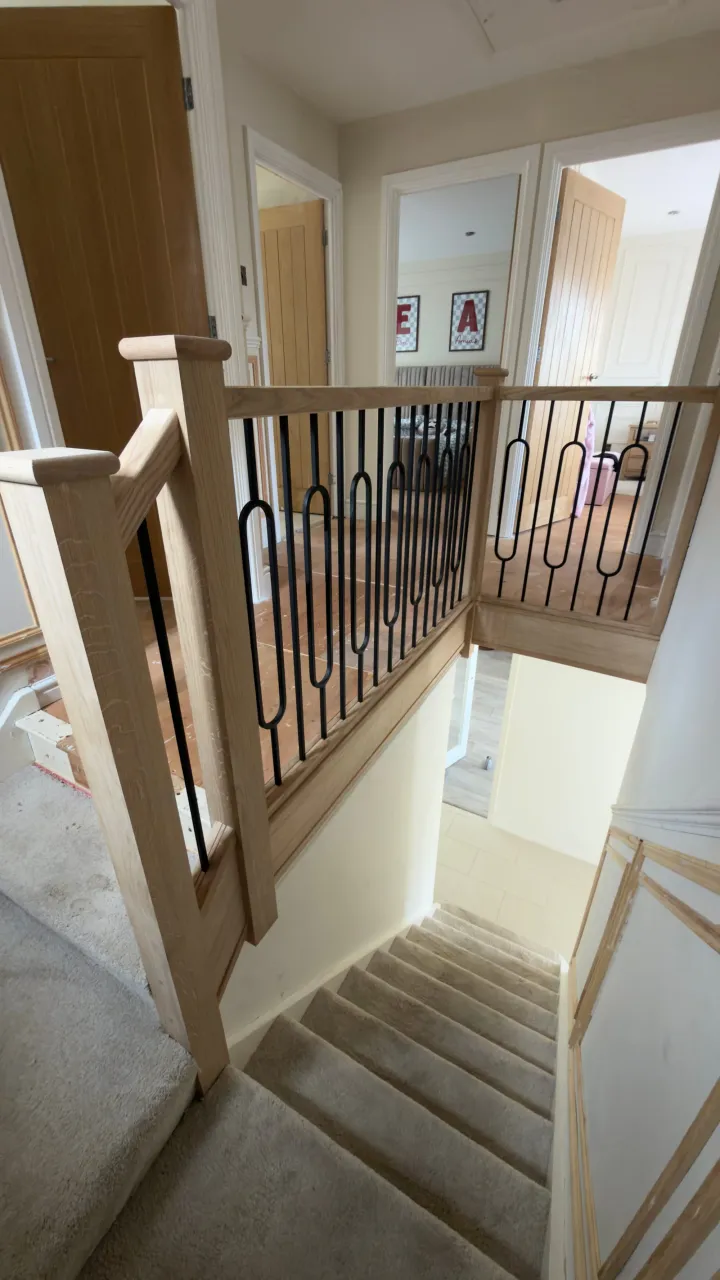
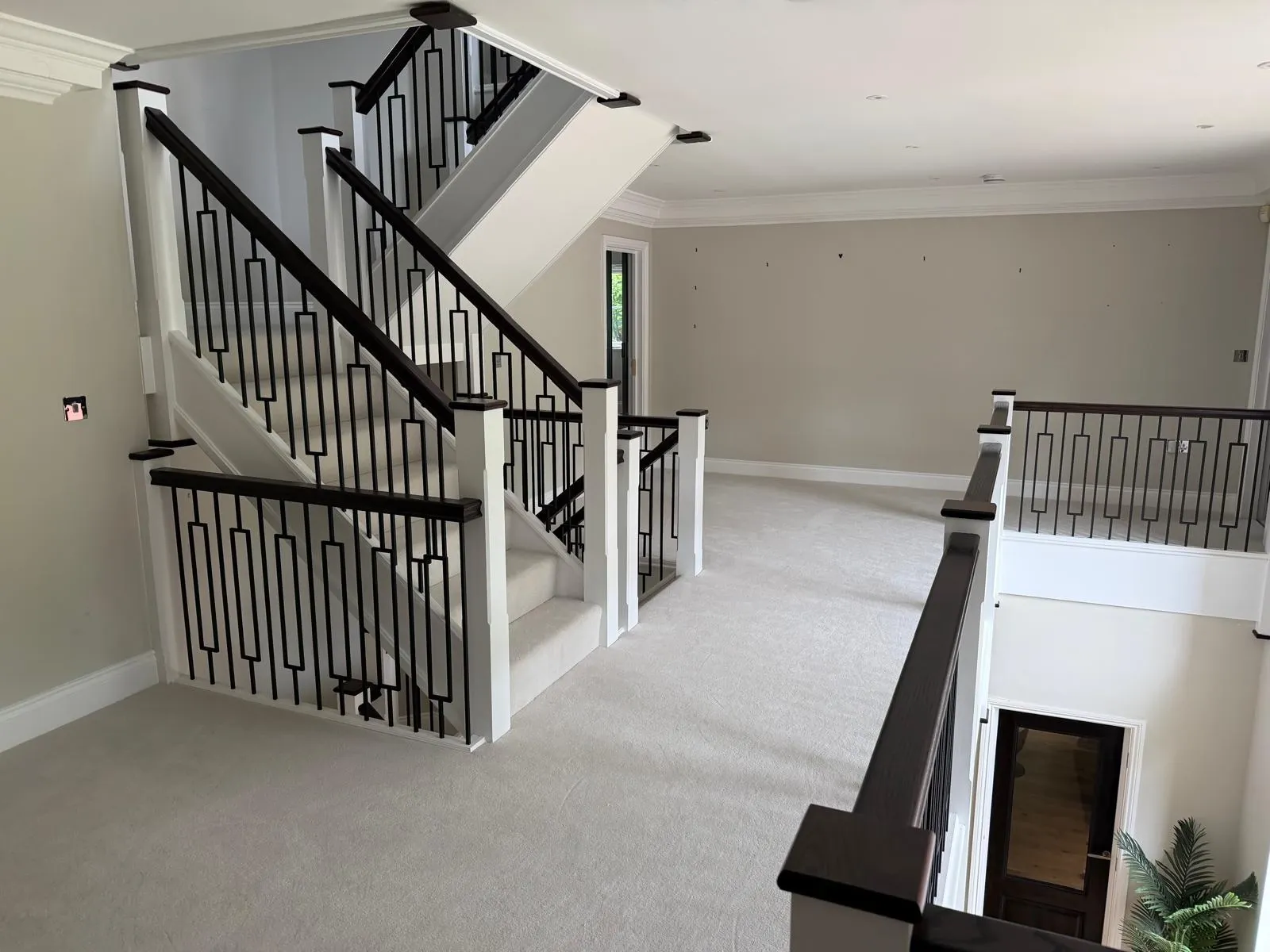
The design used a mix of straight square spindles and rectangular feature spindles. On a staircase of this scale, the pattern worked really well. The repeated lines carried through the different floors and gave the whole staircase a much more architectural feel.
Floor by floor, the transformation started to come together. The white-painted newel posts and aprons made the space feel lighter. The dark oak handrails added warmth and detail. The black metal spindles brought the sharpness the original staircase was missing.
It completely changed the feel of the hallway and landing areas.
Staining the bottom tread
While the decorators were painting the staircase, I took on one extra detail: the bottom double bullnosed tread.
The bottom tread was oak and needed to tie in with the new handrails. That sounds simple enough, but it turned into one of the trickier parts of the job. The old Osmo oil had penetrated into the oak, so even after sanding, the timber did not behave like fresh oak. It reacted with the stain differently, which made matching the colour to the new handrails more difficult.
I sanded the tread right back to bare wood, then applied three coats of stain, working carefully to bring the tone as close as possible to the new Arundel Oak handrails. Once the colour was right, I finished it with a satin polyurethane lacquer.
That detail was worth the effort. The bottom tread is one of the first parts of the staircase you see when you walk into the home, so it needed to feel intentional. Matching it to the handrails helped tie the whole refurbishment together.
The finished staircase
By the end of the three weeks, the staircase had completely changed.
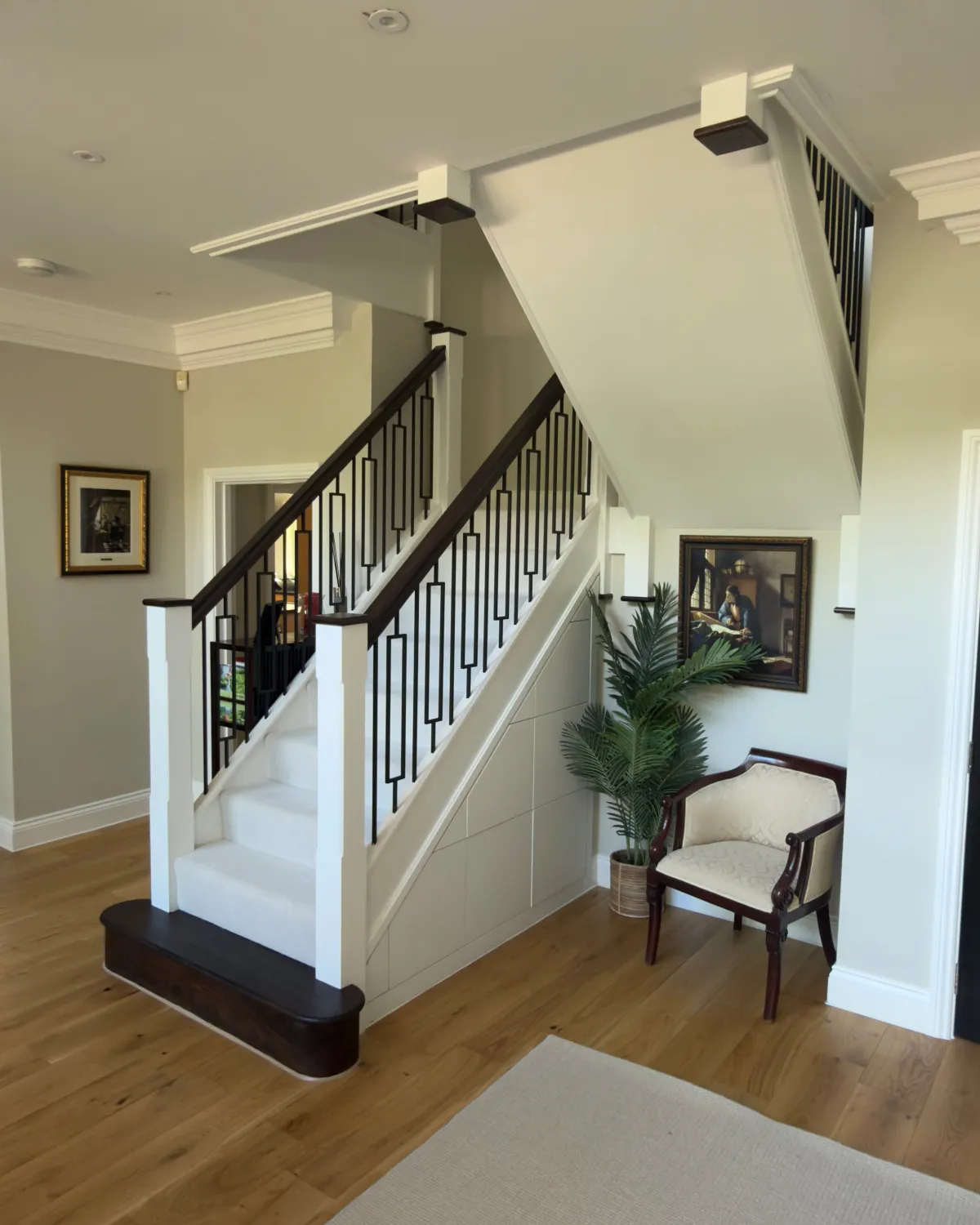
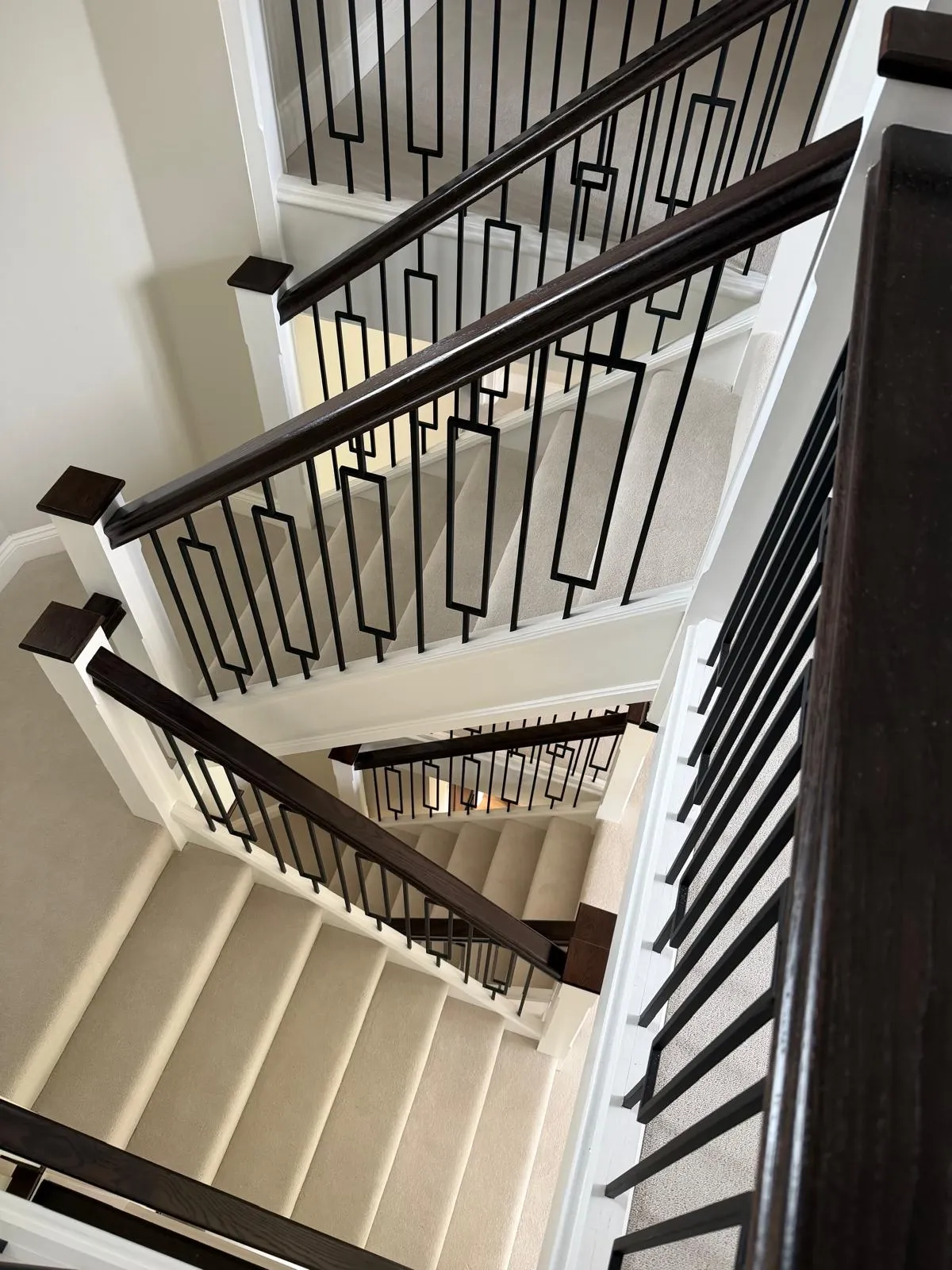
The original orange-toned oak and heavy timber spindles had gone. In their place was a much sharper staircase with dark stained oak handrails, black metal spindles, white painted timberwork and matching dark oak details.
It still felt right for a large family home. The refurbishment kept the scale and character of the original staircase, while giving it a cleaner and more current finish. My favourite part is still the Arundel Oak handrails. The stain brings out the grain in every piece of oak, and because each handrail takes the finish slightly differently, the staircase has real depth and character.
This was a big staircase refurbishment, and there was a serious amount of work involved from everyone on the job. Standing back at the end, it was one of those projects where the effort was obvious.
The clients were delighted with the result, and we managed to exceed what they were hoping for. That is always the best finish to a job.
Staircase refurbishment in Tunbridge Wells, Kent and the South East
A full staircase replacement is not always needed. If the main structure is sound, a refurbishment can completely change the look of a hallway, landing or entrance space while keeping the existing staircase in place.
This project in Langton Green shows what can be achieved with new oak handrails, black metal spindles, careful preparation, a proper painted finish and the right stain colour.
Axton’s Staircases carries out staircase refurbishments across Tunbridge Wells, Kent, Medway, Gravesham and the wider South East. If your staircase feels dated, heavy or out of step with the rest of your home, a refurbishment may be the right route.